

How to get to San Blas from Panama City?
Getting to the San Blas Islands requires different logistics from destinations with commercial airports, tourist terminals, and conventional public transportation. The archipelago is located in Guna Yala, an autonomous Indigenous territory on Panama’s Caribbean coast, and visitor access follows rules established by local authorities.
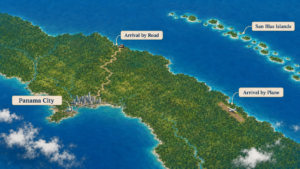
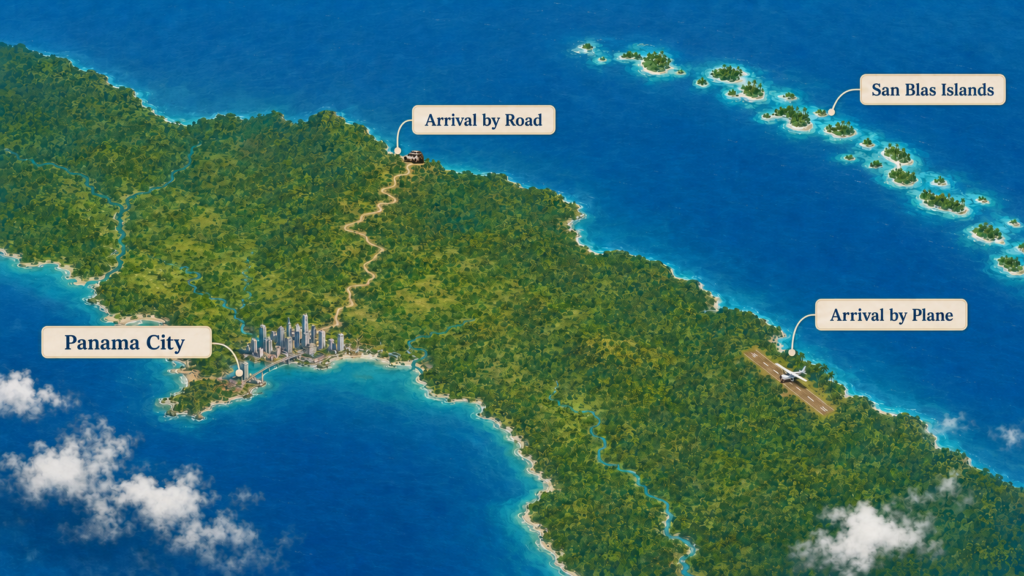
By land, the journey combines three stages: a 4×4 transfer from Panama City, waiting time at a Guna Yala port, and a speedboat ride to your reserved catamaran or bungalow.
It is also possible to arrive by private small aircraft. Flying significantly reduces travel time, but small aircraft have strict weight limits, are more sensitive to weather conditions, and require a higher investment.
Below, we explain how each transportation option works and what you should consider before choosing.
How does the shared 4×4 transfer work?
Shared ground transportation starts before sunrise. A 4×4 vehicle picks up passengers at the hotel provided on the reservation form. It is important that your hotel be within the transportation company’s service area in Panama City.
Departure is at approximately 5:00 a.m. There are no other departure times for shared ground transportation because transfers follow the entry logistics for Guna Yala and the speedboat schedule from the port.
The drive to the territory takes approximately three hours. Most of the road is paved, although there may still be unpaved sections or areas with uneven pavement.
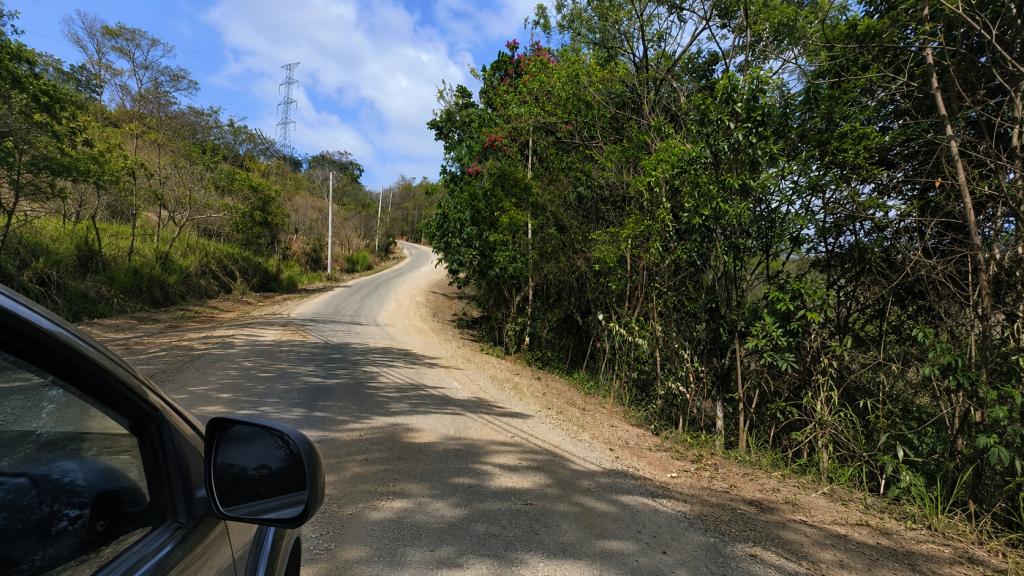
The route crosses a mountainous area and is very winding, with climbs, descents, and many curves. If you are prone to motion sickness on this type of road, prepare in advance and consult a healthcare professional about appropriate ways to reduce discomfort.
The 4×4 is shared with other travelers, usually up to approximately six passengers. Depending on the day’s schedule, the vehicle may stop at several hotels before continuing toward Guna Yala.
It is also important to confirm in advance that your hotel is within the transportation company’s route. When you reserve transportation, clarify any questions and provide all requested information. Areas far from central Panama City or locations outside the city may require an additional transfer to a designated meeting point.
Important recommendation
We do not recommend scheduling an international flight arrival and your departure to San Blas on the same morning. A flight delay, immigration procedures, or a baggage issue could cause you to miss the transfer. Because there is no later shared departure after approximately 5:00 a.m., missing it can compromise the entire logistics of your reservation.
Entry Checkpoint for Guna Yala
Guna Yala is an autonomous Indigenous territory with its own authorities, rules, and forms of organization. Visitor entry and tourist transportation operations are controlled locally.
Before entering the territory, the 4×4 passes through a checkpoint. At that time, all passengers must present their original passports.
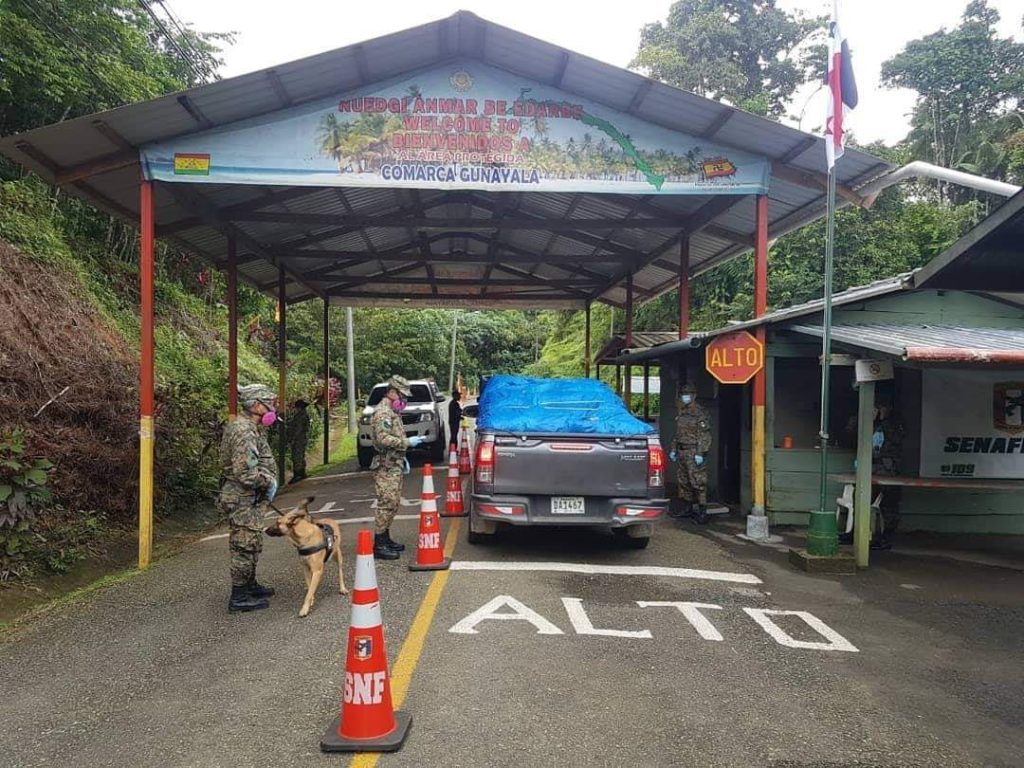
Authorities may also verify that visitors have a reservation aboard a catamaran or at an accommodation that is properly authorized to receive tourists, operates in accordance with local rules, and is current with taxes established by Guna authorities.
We recommend keeping the following easily accessible:
- Original passport for each passenger;
- Accommodation confirmation;
- Reserved transportation information;
- Required documentation for minors, when applicable;
- U.S. dollars in cash to pay local fees.
Entry and port-use fees are established by Guna authorities and may change. Current amounts should therefore be confirmed before your trip.
We also recommend saving important confirmations and documents on your phone. Internet service may be limited or unstable during the journey.
What Is the Wait and Boarding Process at the Port Like?
After the entry checkpoint, the vehicle continues to the designated port. It is important to understand that ports in Guna Yala are not conventional tourist marinas.
Infrastructure is simple and locally managed. When you arrive, the driver will tell passengers where to wait until they are called to board the appropriate speedboat.
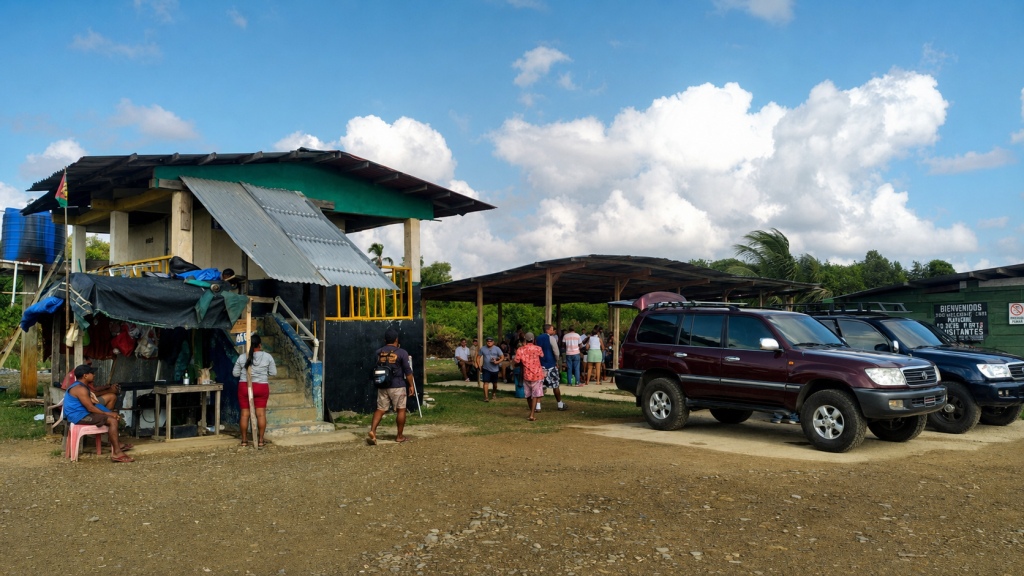
The wait is usually around one hour, although it can vary. Organization depends on vehicle arrivals, passenger distribution among the speedboats, sea conditions, and the location of each catamaran or bungalow.
While waiting, we recommend:
- Remain in the area indicated by the driver;
- Keep your passport and valuables with you;
- Make sure all luggage is identified;
- Do not approach the speedboat until you receive instructions;
- NEVER use a drone at the port;
- Do not photograph residents or workers without permission.
The port can be very busy, especially on days with a higher number of arrivals and departures. This stage is part of the local transportation system and does not operate like a terminal with individual boarding times.
How Does the Speedboat Transfer Work?
The speedboat is the final stage of the overland journey. It transports passengers from the port to the catamaran or to the island where the reserved bungalow is located.
The ride usually takes approximately 40 to 90 minutes. Travel time depends mainly on:
- The location of the accommodation or catamaran;
- Sea conditions;
- Possible stops for other passengers.
Speedboats generally have a roof but are open on the sides. Even with overhead protection, both passengers and luggage can get wet from spray.
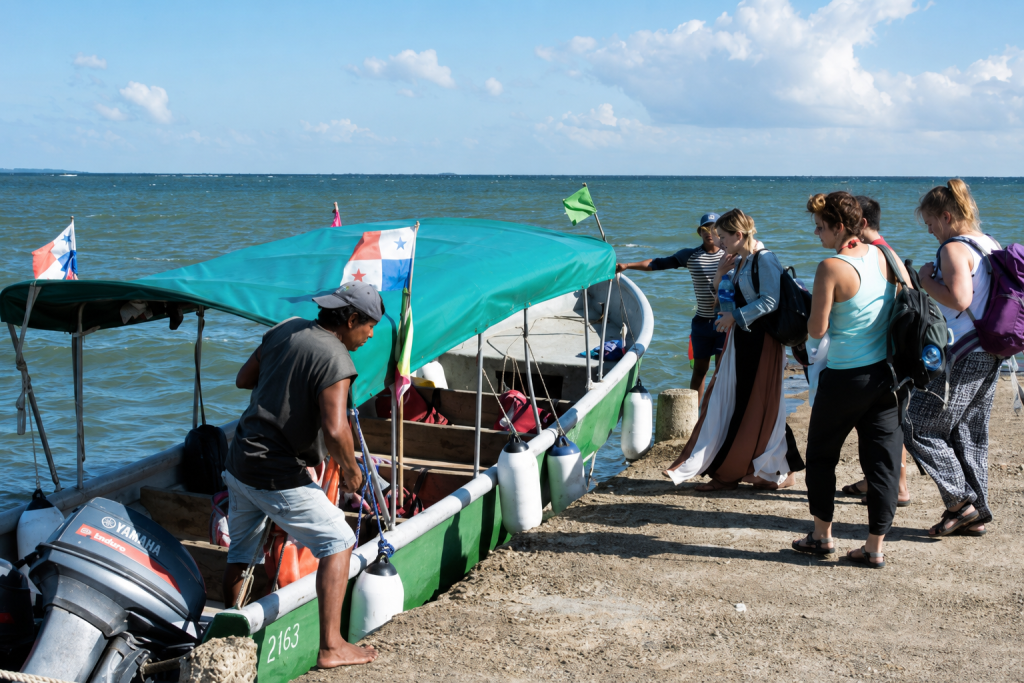
For this reason, passports, phones, cameras, and other electronic equipment should be protected in waterproof bags or cases.
Upon arrival, catamaran guests board directly from the speedboat. Guests who reserved a bungalow are taken to the corresponding island.
San Blas has more than 300 islands spread across different regions. Speedboat travel time therefore varies from one reservation to another and should not be compared solely by the distance shown in map apps.
How Does Transportation by Private Small Aircraft Work?
Another option is to travel on a small private aircraft between Panama City and an airstrip in Guna Yala.
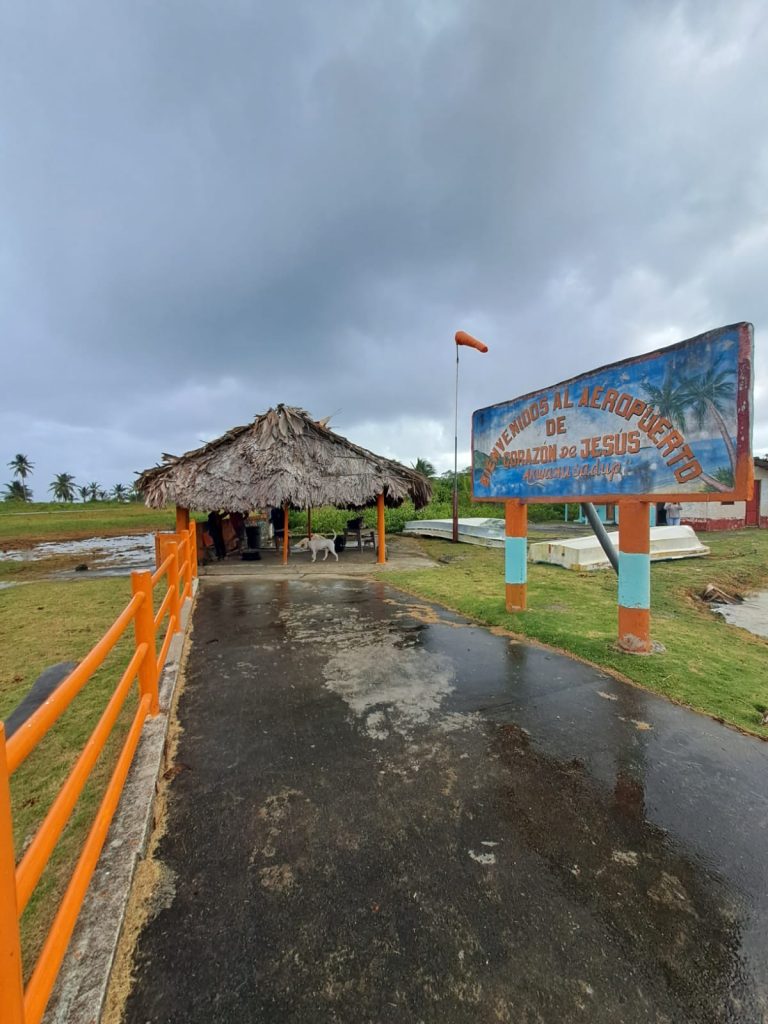
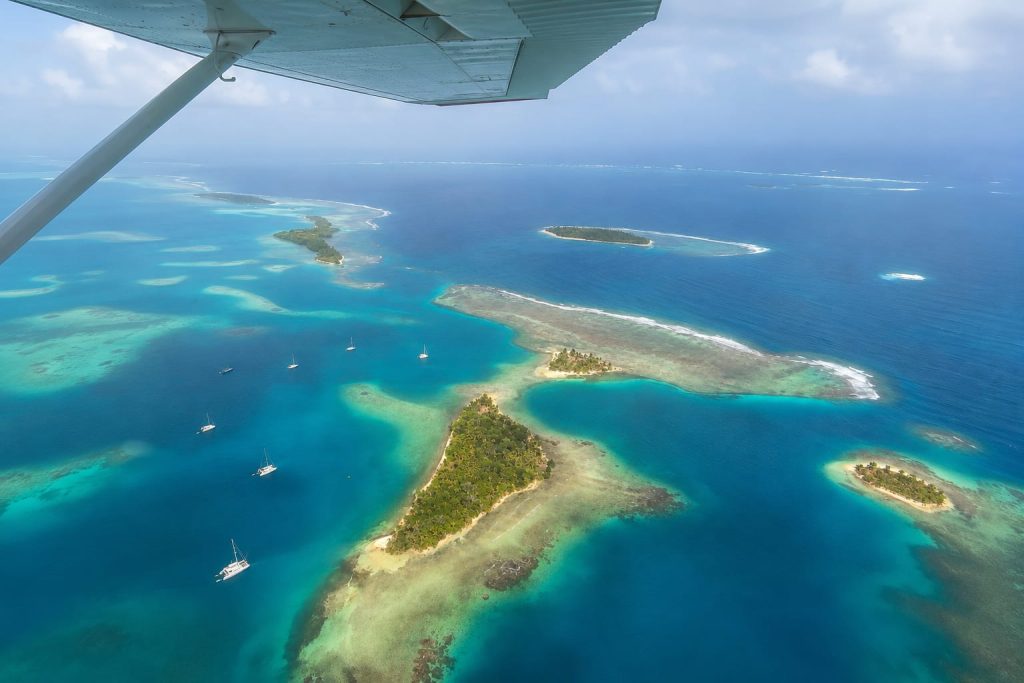
The flight takes approximately 40 minutes and significantly reduces overland travel time. It also offers panoramic views of the islands, coral reefs, and the different shades of the Caribbean Sea.
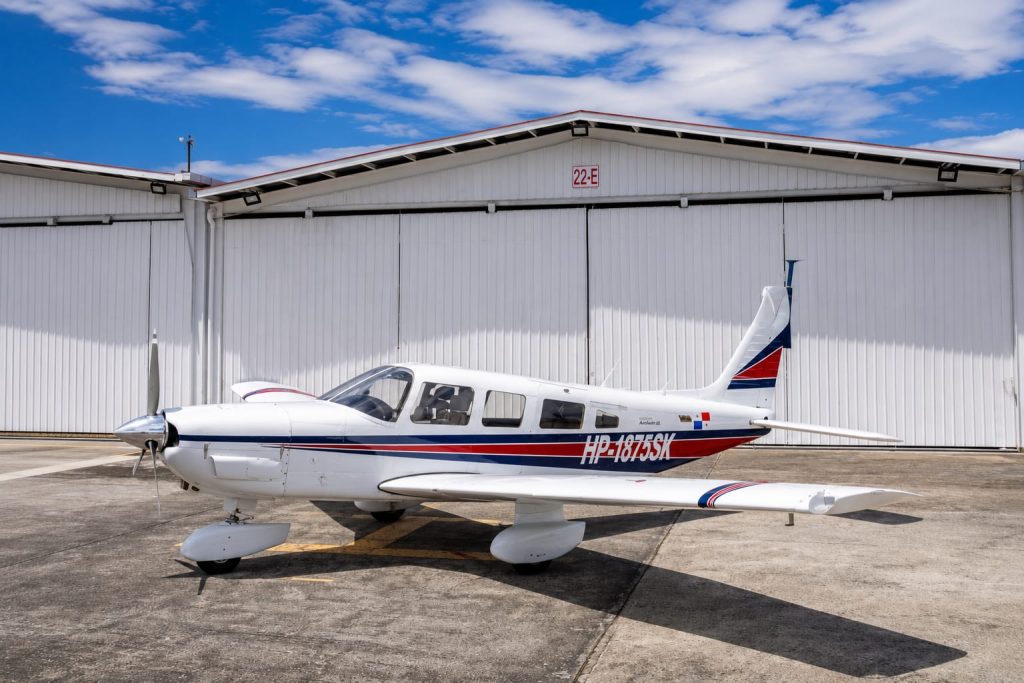
Flights do not depart from Tocumen International Airport. Boarding takes place at a hangar in Panama City; the address and instructions are provided after the reservation is confirmed.
Departures take place during the day, frequently around 10:00 a.m., although there is no fixed schedule. Timing depends on aircraft availability and, above all, weather conditions.
Weight Limits
Small aircraft have strict total-weight limits. To request a quote, you will need to provide:
- The individual weight of each passenger;
- Number of bags;
- Approximate luggage weight.
Passengers and all luggage will be weighed before boarding. This is an essential operational safety measure.
If the combined weight of the group and luggage exceeds the limit of the reserved aircraft, it may be necessary to reduce luggage, use a higher-capacity aircraft, or charter a second small aircraft. Any of these solutions may increase the cost and must be paid by the passengers.
Does the Plane Arrive Directly at the Catamaran or Bungalow?
After landing in Guna Yala, the next transfer depends on the experience you reserved.
If you reserved a shared catamaran, the catamaran will be anchored near the airstrip. The transfer takes only a few minutes and is made using the catamaran’s own dinghy, at no additional cost.
If you reserved a bungalow, you will need to continue by speedboat to the island where it is located. That transfer takes approximately one hour; total travel time depends on sea conditions.
Can the Transportation Company Change the Flight?
Yes. Flights on small aircraft depend on weather, visibility, and runway conditions. The air operator may change the schedule or route, or cancel the flight when conditions are not safe for operation.
Ground Transportation or Private Flight: Which Should You Choose?
Both alternatives allow you to reach San Blas. However, each one is better suited to different needs and traveler profiles.
| Criteria | Ground transportation + speedboat | Private flight |
| Main travel time | Approx. 5 hours including 4×4, waiting time, and speedboat | Approx. 40-minute flight |
| Departure time | Around 5:00 a.m. | Approximate window between 9:00 a.m. and 2:00 p.m. |
| Type | Shared | Private |
| Investment | More affordable | Higher |
| Luggage | Moderate limitations | Strict weight control |
| Characteristics | Winding road + speedboat | Small aircraft |
| Weather dependency | Primarily during the marine transfer | During the flight and marine transfer |
| Best suited for | Most travelers | Groups that prioritize time and enjoy panoramic views |
Ground transportation is the option used by most travelers because it is more affordable. The currently published rate is USD 150 per person, round trip, including the 4×4 and speedboat transfers.
A private flight can be especially attractive for families or groups that want to reduce transfer time, avoid the winding mountain road, and make the flight part of the experience. However, everyone should be comfortable flying on small aircraft and with the luggage restrictions involved.
Flight pricing is calculated per leg and according to the aircraft required for the group’s total weight, not simply by the number of passengers. The reference rate published in this article ranges from USD 250 to USD 350 per person, per leg.
Luggage Recommendations
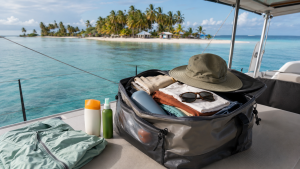
Regardless of the transportation option you choose, we recommend traveling light. Space is limited in shared 4×4 vehicles, speedboats, and small aircraft.
Prioritize:
- Soft-sided bags;
- Compact backpacks;
- Waterproof organizers;
- Lightweight, quick-drying clothing.
Avoid:
- Large, hard-shell suitcases;
- High heels and long skirts or dresses;
- Excessive amounts of clothing;
- Fragile items without protection;
- Electronic equipment without waterproof protection;
- Items you will not use during the experience.
For private flights, luggage weight must be reported accurately. On speedboats, soft-sided bags are easier to store and protect.
Keep the following in a personal bag:
- Passports;
- U.S. dollars in cash;
- Phone;
- Personal medications;
- Sunscreen;
- Sunglasses;
- Protected electronic equipment.
There are no banks or ATMs in San Blas. Local payments are made in cash and in U.S. dollars.
How Should You Plan Your Arrival and Return?
To reduce logistical risks, we recommend spending at least one night in Panama City before traveling to San Blas.
On your return, avoid scheduling an international flight with a tight connection after your estimated arrival time in Panama City. Sea conditions, weather, speedboat organization, or traffic can affect timing.
Whenever possible, spend the final night of your trip in Panama City as well. This buffer reduces the risk of missing connections and allows for more relaxed planning.
Which Transportation Option Is Best for Your Trip?
There is no single option that is right for everyone. The best choice depends on your budget, group size, available time, and how comfortable the travelers are with the characteristics of each mode of transportation.
At San Blas Shared, we guide our guests through the logistics of traveling from Panama City to their reserved catamaran or bungalow. This way, each traveler receives the information needed to arrive with expectations aligned with the realities of Guna Yala.
Already Chosen Your San Blas Experience?
Contact us to check available shared catamarans and bungalows and receive the transportation guidance associated with your reservation.